Change.
According to G. Tyler Miller and Scott E. Spoolman, sustainability is “the capacity of the earth’s natural systems that support life and human social systems to survive or adapt to changing environmental conditions indefinitely” (Miller, 4). They identify three scientific principles as being the key reasons why this planet has been able to sustain life: dependence on solar energy for the production of nutrients, enough biological diversity to keep populations from becoming too large and to help life adapt to environmental conditions, and the recycling of chemicals through inter-species interactions. While I recognize that these three principles play key roles in the long-term sustainability of the planet’s life and also understand that key does not mean only, I still want to advocate for their inclusion of a fourth principle: gravity! Gravity makes the rain fall down, gravity makes the seeds from trees fall down, etc. The gravitational forces between the celestial bodies in the Milky Way must not be overlooked, especially given how seemingly rare our planet’s life-producing/sustaining ability is! We are unfathomably lucky to be in our location in the galaxy, to have our particular orbit, and that our planetary neighbors have their particular orbits — and for these factors to have been the case for over 3.8 billion years — so, I think that is worth mentioning in a lesson about how this planet became and continues to be Living Earth.
In addition to their three scientific principles, Miller and Spoolman suggest three other principles of sustainability that stem from economics, politics, and ethics rather than from science. The principle stemming from economics is the idea of full-cost pricing. To elaborate, these authors call for “the harmful environmental and health costs” of goods and services to be reflected in their prices as a means of increasing consumer awareness of such problems (Miller, 5). The next principle, coming from a political science standpoint, is the “win-win solutions” principle (Miller, 5). With this principle they suggest that environmental problems can be solved by humans cooperating and compromising with each other to determine solutions that “will benefit the largest number of people as well as the environment” (Miller, 5). Their final principle, stemming from ethics, is feeling a sense of responsibility to leave “the planet’s life-support systems in a condition that is as good as or better than it is now” for future generations of humans (Miller, 5). I take issue with these three principles because of how human-centric their language is and how little imagination they are using! I think that instead of imagining a future where pollution is taken into account when pricing goods, we should be striving towards creating and using goods and services that do not require our emitting of pollutants. I do not think that when listing principles of sustainability and proposing solutions to our mass level of environmental degradation all across the planet I should be seeing the words ‘the environment’ being preceded by the words ‘as well as’ — it should be the primary focus (for once!), and not separated conceptually from ‘people’ because in reality there is no separation. Miller and Spoolman claimed to have named the textbook Living in the Environment to emphasize this last point, but then immediately contradict it in their first chapter. Also, why must we feel a sense of responsibility to future generations of people in order to want to stop destroying habitats? What about proposing instead that we feel a sense of connection to the other life forms on this planet that are already actively trying to live and are already actively being hurt by our actions? In my opinion, no matter how much human society changes, the change will not be enough if the voices of ‘sustainability’ and the people who claim to care about the planet continue to think that the universe revolves around our own species. We must recognize our animality and develop a greater, much deeper compassion for our fellow beings on this unique and beautiful and immensely fragile, tiny rock in space.
In the following section of the chapter, Miller and Spoolman discuss how our ecological footprints are affecting the planet. Almost every person on Earth has an ecological footprint, or, in other words, plays a role in harming the environment by contributing to the pollution of air, land, and water during their everyday activities. One attempt at calculating this human harm is the Impact Model in which Impact equals Population times Affluence times Technology because the amount that one pollutes is very strongly correlated to the amount of wealth one has and how much they participate in the oftentimes-polluting activities of the wealthy lifestyle. The 1992 World Scientists’ Warning to Humanity addresses this very subject, specifically calling out the developed nations of the world (though redefining the word developed would be helpful) and their heightened responsibility to come up with sustainable solutions. This responsibility lies on us as rich people consume more meat, consume more packaged and processed items, buy more clothing and gadgets, travel around in cars and airplanes, and live in houses that take up the most space and use the most energy. To make matters worse, the wealthy people of the world also are the beings that are the farthest removed from feeling the negative effects of climate change and the farthest away (usually) from the sources of pollution (for example, there are no million-dollar mansions sitting right next to a toxin-spewing factory, usually low-income housing is next to that instead). The people living in the United States of America are some of the worst polluters in the world and have the highest ecological footprint. The online ecological footprint calculator states that if everybody lived like middle to upper class Americans, we would need five more Earths to support our species! I find this sickening, but not surprising because I have lived here my whole life and know how much shopping for fun is done in the country and how meat and produce is shipped all around the world for us to eat almost every single meal. While this country’s wealth does allow us to push the worst effects of environmental destruction onto others, the World Scientists warn that the scale of environmental harm will eventually consume us all: there is only “one lifeboat” (Union of Concerned Scientists 1992). In this country, we still fail to recognize that the loss of viable ecosystems will not be a problem confined to one part of the globe. As wealthy nations we are also able to do the most to fight climate change. The same wealth that drives overconsumption could easily be redirected towards helping our own and other countries come up with workable solutions. It is not too difficult to understand how countries ravaged by poverty and war might not have the resources, money, or time to build wind farms or invent better recycling systems.

My ecological footprint, screenshot.
When I calculated my ecological footprint, I needed 1.4 Earths to support my own lifestyle. I am now on a mission to get myself down to one Earth, because truly that is all I and anyone else has. I want to reduce the amount of packaged and processed food I consume upon learning that ‘food’ was the section that contributed the most to my own footprint, even though I am a vegetarian. For example, I plan to no longer buy frozen vegetables that come in a bag but rather I will buy fresh vegetables from my grocery store that are not in any packaging and during the spring and summer I will go to the farmer’s markets around me more to make sure I am consuming locally-grown food. This is just one example of a small change that I can make for the sake of the planet. However, I understand that the changes that I make in my own life can only do so much and that certain environmental issues lie out of my immediate lifestyle—I am not able to regulate the worst polluters, or the worst fisheries, or the worst the farmers. With environmental issues outside my own hands I turn to activism, in order to try to rally those who do have power and put that power to use towards environmental benefit. How much of a difference do you think it would make if everyone made individual changes to try to reduce their footprint? Have you done anything to reduce yours yet/plan to? Word Count: 1402
Union of Concerned Scientists. 1992 World Scientists’ Warning to Humanity. July 16, 1992.
Delicate Connections.
Through observation, experimentation, data collection and evaluation, identification of patterns, and critical thinking we have been able to better understand ourselves, our fellow organisms, and the non-living aspects of Earth that we depend upon. We now know that everything here is made of matter and that matter can be broken down into elements. In living beings, these tiny and unique substances combine to form one or more cells (life!). A fact that truly boggles my mind is that there are 118 elements in the periodic table, but only six of them account for 97 percent of human body mass! These elements are carbon, hydrogen, nitrogen, oxygen, phosphorus, and sulfur. Elements manifest in different ways. Some can exist on their own, some have to form compounds with themselves, and some have to form compounds with other elements to be stable. The matter they create comes in three physical states: solid, liquid, and gas. These states, like everything, are subject to change. One of the most important ways in which matter changes, is through the transfer of energy.
Energy is the force that allows for actions and processes to happen; it is often defined as “the ability to do work” (Miller, 39). There are two main forms of energy. One form is potential energy, which is stored energy in non-moving matter. Once matter is set in motion, the potential energy becomes the other main form, kinetic energy. We use energy to walk, to pick up a leaf, and to high-five our friends. We also use it, in much larger quantities, to power our homes with electricity and to make our cars and buses run. Scientists divide the energy we get from natural resources into two major categories: non-renewable energy and renewable energy. Non-renewable energy is from resources that “can be depleted and are not replenished by natural processes within a human time scale” (Miller, 41). Examples of this kind of energy are fossil fuels such as natural gas, oil, and coal. The overwhelmingly large majority of the world’s energy comes from these sources, much to my disdain since learning about their driving of climate change and since becoming a climate activist a few years ago. These energy sources are able to be used through intense extraction from the earth in the form of fracking, blowing up mountains, and digging deep into the ground while destroying everything above it. Furthermore, when these sources are burned they release carbon dioxide, which is present in such large amounts in the atmosphere that it is causing the planet to warm extremely rapidly due to the greenhouse gas effect. This is disrupting ecosystems everywhere as they provide feedback loops. One might think: why do I care if an ecosystem that does not affect me gets disrupted? To this person I remind: all of Earth’s ecosystems provide us with a plethora of services that we could not manage or provide for ourselves otherwise. For example, the trees in a small patch of forest near a suburb absorb some of the carbon dioxide emitted from the residents’ cars, the toads in a nearby creek eat the mosquitoes that would annoy you in your yard during summers. One is always existing in ecosystems wherever one goes, and always dependent on those that one cannot see as well (such as those involving the tiny oceanic phytoplankton that provide us with the oxygen we need to breathe!). As climate change fueled by these burning fossil fuels persists, ecosystems try to adapt, but all too slowly because they cannot keep up with the pace of our intense consumption of these sources. Renewable energy is the alternative. This is the form of energy that can be replenished naturally within a human time-span, such as wind power and solar power. While these sources still require a lot of extraction from the earth (for example, of the metals needed to produce huge wind turbines and solar panels for households), they do not contribute to the greenhouse gas effect nearly as much as burning fossil fuels does and hopefully within the next 10 years we will mostly power our societies using this form of energy. I think that while we must make the transition away from fossil fuels as quickly as we can, another important step we need to take right now is decreasing our energy consumption in general. We need to be more conscious of the strain we put on the ecosystems around us when we want to power millions of buildings all day every day.

Energy transfers in a wetland, Pinterest.com
Everything is delicately connected, and whether we like it or not we are connected to an unfathomable amount of diverse life every moment of our lives. Through food chain and chemical reactions with biotic and abiotic factors we at some point or another touch a vast amount of other lives. For example, let’s say you eat a fruit and throw the scraps on the ground while hiking in a forest (which you should not do because it is still littering if it is not a fruit native to that area, but for the sake of the example let’s say you did this). Over next few days or weeks, those fruit scraps will get nibbled on by animals and insects and bacteria. It will eventually end up replenishing the soil it landed on with nutrients, which will allow a wildflower to grow. A pollinator will land on that flower and many others, helping to provide food to the animals that eat the flowers. I could go on, but you can already see that your one action has touched the lives of so many beings in that one area of the forest! This connection will continue even to parts of the world one rarely thinks about, like the deepest parts of the ocean where creatures feed on the tiny fragmented debris of dead plants and animals in total and perpetual darkness. We will never truly know of all the connections between the diverse life-forms that exist here, but aren’t we so lucky that we get to be the animals to try? We are the Earth made conscious of itself! I strive to learn all about its mysteries and about the invisible strings that tie us all together as I continue to age here and to encourage other people to be fascinated by these connections as well. How often do you think about your own connection with the non-human beings in your life? Why might you think that, given the current model of mainstream society in the United States, it might be difficult for people to remember their connection to non-living beings? Word count: 1105.
Miller, G. Tyler and Spoolman, Scott E. Living in the Environment. 19th edition. Boston, MA: Cengage Learning, 2018.
Zoom Out.

Humanity’s place in the galaxy, Pinterest.com
The term ‘Big History’ refers to the study of history tracing all the way back to humanity’s estimated origin of the universe itself. Necessarily, its scope spans over 14 billion years and areas of focus include the Big Bang and the universe’s continuous expansion thereafter, the death of stars, the formation of the galaxies, the formation of planets, Earth’s formation, the development of life on Earth, and then the development of humanity. As a field of study, Big History is intentionally interdisciplinary as it draws from knowledge gathered by different academic groups such as astronomers, astrophysicists, cosmologists, biochemists, and archeologists to name a few. By bringing all of these different kinds of knowledge together, big historians aim to discover and assess various patterns and themes present in the universe’s history. So far, one of the themes that has emerged from this study is that everything undergoes some kind of change. This change is driven by changes in types and concentrations of energy present among matter (and likely to be the case even with dark energy and dark matter, which make up the overwhelming majority of the universe’s composition). Another theme that arose from Big History is the one that states that things progress towards an ever-increasing complexity. This is the case if one looks at the macro-history of the universe, in which there was supposedly nothing then an explosion that created all of the complex galaxies and celestial bodies that never cease to evolve and breed even more celestial bodies. This is also the case here on Earth, as the creation of water lead to the creation of many different single-cell organisms which evolved into the bio-diverse living world we know of and came about from.
Big historians greatly differ from other historians in terms of how they view humanity. One key difference is that big historians necessarily place humanity’s history within the framework of the universe’s history. When working within this framework, one is automatically reminded about how new our existence is in relation to the existence of the space in which we exist. On the other hand, many historians begin their timeline not even with the beginnings of humanity (which occurred around 200,000 B.C.) but at the origin of civilizations with written records and agriculture. So, their framework is much more narrow as it begins only around 5,500 B.C. From this difference in framework and timeline stems the other ways in which big historians differ from others: the amount of importance placed on inter-human interactions. To elaborate, when civilized humanity is the primary focus of study, the wars and alliances and trading patterns of kingdoms and tribes and nation-states are of great significance. From this significance arises the significance of even certain individuals: queens, and politicians, and revolutionaries. Because anyone could argue the historical importance of any one person or collection of people, historians then become segmented and siloed as they specify which particular time period and people within their relatively small timespan they want to become an expert in. Big historians are on the other side of the spectrum. Rather than zooming in focus as close as even just one person’s adult life, they remain zoomed out — looking at humanity more as a collective whole.
Personally, due to the reality that I am already living through the early stages of anthropogenic climate change, I find the mindset of a big historian very easy to grasp. I would even go so far as to say that I live my life in this ‘zoomed out’ mindset and have for the past three years since learning about this planet’s degradation. I cannot help but be amazed at how quickly everything has happened and is happening. Take the environmental history of the United States for example. This history can be broken down into four parts: the tribal era, the frontier era, the early conservation era, and the modern era in which the federal government and private groups of citizens play an increasing role in establishing environmental protections. The tribal era refers to the more than 13,000 years in which people now called Native Americans lived on land now called the United States in ways that had a relatively low harmful effect on ecosystems and air and water quality. Then, during the frontier era (1607-1890), Europeans invaded these civilizations, committed one of the largest genocides in history, and started heavily extracting resources from nature to make money and build a new kind of civilization. They generally held the belief that nature is meant to be controlled by humans for our own benefit and that natural resources are so abundant that we could never possibly deplete them. However, many people during this time period were astonished by how quickly people were depleting the natural resources and in response these people created the early conservation movement in this country (1832-1870). One notable figure of this stage of the movement include writer and naturalist Henry David Thoreau who wrote detailed accounts about his experiences going into the wilderness areas of the northeast United States and Canada and ruminations about living simply, and harmoniously with nature. Another was preservationist John Muir who made excursions into California’s Yosemite Valley and established Yosemite National Park, and wrote about his excursions into other areas of the western U.S. as well. Arguably the most famous figure of the era was President Theodore Roosevelt, who was responsible for creating the national wildlife refuge system and expanding the national park system greatly during a presidency deemed the Golden Age of Conservation. During the modern era, we see figures arise such as Aldo Leopold who encouraged people to be stewards of the land and appreciate our special role within it. We also witness the devastation caused by many new products and chemicals through biologist Rachel Carson’s influential and shocking work Silent Spring. Also, many government environmental programs were established including the Civilian Conservation Corps (1933), the Soil Conservation Act (1935), the Wilderness Act (1964), and the Environmental Protection Agency (1970).I believe that the lense of big history could be a new tool of the current U.S. environmentalist movement, which unfortunately because we have changed the land, water, and atmosphere to drastically is also inherently connected to the movement to slow the rate of climate change. It could be a useful approach by climate activists to remind people about our place within the history of the universe, and remind people about how small and new that place is. Perhaps then more and more people would be able to wake up to the reality about how quickly so much life continues to disappear each year and truly appreciate the billions of years it took to create all this life in the first place. I believe that with this appreciation more people would join the movement to keep this abundance of life thriving.How often do you think about your own place in the universe? How does it make you feel? Why do you think some people would be opposed to thinking this way? Word Count: 1176
Environmental Worldviews.
An individual’s perspective on the environment and how they relate to it can have a significant impact on the way they make economic decisions, the way they vote, and the way they just go about their daily life. While there are many different environmental perspectives, these perspectives can be primarily categorized in one of two ways: human-centered or life/earth-centered.

Illustrating the two differing worldview categories, Pinterest.com
People with human-centric, or anthropocentric, views believe that the needs and desires of humans are more important than those of other species. Furthermore, within this worldview is the belief that humans rightly dominate the planet and exert control over other species because we are more intelligent and resourceful. Within this human-centric worldview category, there are a few prominent subcategories. One school of thought views our planet as ‘spaceship-earth’: our machine that we are floating in space on and can understand and control. When it comes to environmental problems, there are those in the ‘no-problem’ school of thought who think that any disturbance or devastation we cause to the planet can be solved with new technological advancements and innovative methods of operation. Those in the ‘free-market’ school believe that such problems will be solved through the method of privatizing everything and allowing unregulated trade between self-interested parties to occur. Some human-centric thinkers believe that we need to be stewards to the planet because they feel an ethical obligation to do so. Those who do not have an anthropocentric view on the world are said to have an ‘environmental wisdom’ worldview. While there are many facets to these types of views, the principle and uniting factor is the recognition of humanity as one species within an interconnected biological network of millions of other species that is not in control of the planet but rather subject to natural laws and forces just as any other species. There are many societal, cultural, and historical factors that affect the formation of one’s environmental worldview. For many, the adoption of a personal environmental worldview may not have even been a conscious decision. I will use myself as an example! In high school I realized that I happened to hold the ‘no-problem’ worldview. Looking back, it was likely because this was the general consensus of the adults in my life and I never questioned it. I had so much faith in human technological progress that I truly thought we could solve everything with new technology. It was only in my senior year of high school when I purposefully changed my worldview to an earth-centered one after learning about the importance of pollinating insects — real insects that could never be adequately substituted by robots. I encourage those unsure about their worldview to think about their values and personal visions of the future when trying to decide which schools of thought they gravitate towards.
Within the realm of environmental philosophies there are questions of ethics and justice regarding humanity’s relationship to the planet. When it comes to environmental ethics, there are those that emphasize intragenerational human justice by taking part in the Environmental Justice Movement (EJM). People in this movement do not regard the environment as a separate entity from humanity but rather understand it as anywhere one lives, works, or recreates. This movement has roots in and is still largely led by grass-roots organizers who help communities that are dealing with various environmental injustices such as being exposed to pollution and toxins and being removed from culturally important natural areas. While much of this movement manifests as local groups dealing with local problems, increased globalization has led to the development of a global environmental justice movement in which the Global South demands due justice from the Global North whose overconsumption of natural resources (largely extracted from regions in the South) causes and exacerbates the South’s environmental degradation. With environmental justice, there are some who emphasize the importance of intergenerational human justice as well. These people believe that we in the present have a duty to future generations of people to pass on a planet to them that is life-supporting and healthy. Therefore, many hold the position that today’s governments should establish rules and regulations that prevent today’s people from using up too much of the planet’s natural resources and from polluting the air, land, and water to an irreversibly damaged level that would prevent future people from using them in the ways that we currently enjoy. One reason why such reasoning has not amounted to many actual policies yet is because critics of this way of thinking beg the following question: To what extent do possible future people have rights (let alone the right to a livable future planet)? Some argue that since these people do not exist yet, we could not possibly have a social contract with them or any moral obligations to them. There are some libertarians who think that future people will certainly have some negative rights (for example, the right to not be assaulted) which can be protected by the law, but that the right to a livable planet is a positive right and therefore cannot be protected by the law. Some liberals, including John Rawls who to some have written the most well-established argument for intergenerational justice, believe that we need to establish institutions that deal with laws regarding future people and once we do that it will be a solved problem. There are also communitarians who believe that we need to extend our thoughts about community to involve the people in future generations. However, this idea is quite limited as for many it leads them to only think in the near future and about their own community rather than about the world as a whole.
Some people, including myself, think that we need to extend our conception of a community not temporally but in regard to other species. These people have a ‘land ethic’ which was explained by Aldo Leopold in 1949. Leopold claims that: “The land ethic simply enlarges the boundaries of the community to include the soils, waters, plants, and animals, or collectively: the land” (Leopold, 204). With this interspecific justice lense, humans are viewed as members of a biotic team rather than as ruler of the land. We must appreciate, respect, and even love the land we live our lives on in order to live well and ensure that other beings around us can also prosper. For many people this perspective can be difficult to grasp given that an anthropocentric view of the world is common in many modern societies, but I encourage people to ponder the validity of Leopold’s ideas and think about how much their lives depend on the health of their land; I hope they will appreciate it more after doing so.
There are also some people, such as environmental educator David Orr, who think we need to increase the amount of environmental education and nature exposure people get while in the education system (both in the realms of required and higher education). I think that this would certainly lead to an increase in the amount of people interested in environmental academics and might lead people to want to live more sustainably. I agree that educational change could lead to more people having a worldview change that results in a person having more empathy for humans, future humans, and non-humans alike. Systemic educational changes could be a great means to revolutionize humanity’s relationship with the rest of this planet. To what extent do you think the current education system in the U.S. leads people to develop an anthropocentric worldview without them realizing it? Do you have an environmental worldview? If so, what made you realize you have your particular one?
Leopold, Aldo. Sand County Almanac, 1949.
Politics, Business, and the Environment
The United States today is certainly one that is quite different than the country that the founding fathers’ descriptions of what we could be. Rather than being a collection of diverse citizens that are accurately informed about how the government operates, who runs the country, and have a direct say in that process to make sure that corruption and overstepping of political power by a select few does not happen, we have become a nation of mindless consumers and ‘gut-feeling’ voters instead. Are the people of this country not good enough for the version of the United States that the founders envisioned? Have we become this collection of people because we did not want to work hard enough to be the former? No, we have become this way by design and manipulation that is decades in the making. In his online article “Consumer or Citizen?” Dr. Ernest Partridge elaborates on the idea of how we became “America, Inc.” I will discuss his ideas and then discuss what some businesses and people in other occupations and organizations are attempting to do in order to dismantle the current “corporate-nation” culture that has become embedded in our society for decades.
Partridge reveals how instead of the politicians we vote for, a few wealthy oligarchs control the country from behind closed doors. How can he make such a bold claim? I will provide you with his evidence. The American public largely gets its information about politicians and political events in general from news corporations and other media outlets that are owned by people in the top 1% of the U.S. population in terms of wealth (together this small amount of people own over 40% of the entire wealth of the nation). I will note that this article was written in 2002 and unfortunately today the wealth gap between Americans has grown and the pool of the super-rich has gotten even smaller as corporations and media outlets have merged. On these channels and in news articles, there has been a trend (that still continues) for politicians to say less detail about their policy plans, and instead focus on their “likeability.” Their likeability is based on nonsense like how well they dress on camera and how much any given person would want to hangout with them as a friend. This shift in media focus has led American politics in my opinion to feel more like a silly game and high-school popularity contest rather than the serious and important realm that it is.
Why do these select few controllers of the country want to pull the wool over the public’s eyes instead of having them be well-informed decision-makers? It is because they do not care for ideals such as democracy and justice, but rather they care about the amount of money in their bank accounts. They fund politicians that they expect will give them tax breaks and not put laws in place that interfere with the way they run their businesses. Even though the policies that benefit such people undoubtedly do not benefit the American public at large (the 99%), they will still vote in favor of such policies because they are essentially being tricked into doing so. Ernest Partridge points out the fact that the way people vote and the amount of information they have when doing so is similar to the way people shop. The advertising industry does not inform us of all that is in the products we buy, how the products get made, how much money it took to make a unit of the product, where all the product materials came from, etc. Instead, they just show the product wrapped up in a bow, come up with a catchy attention-grabbing phrase to go along with it or hire an attractive person to hold the product, and expect us to make our decisions based on our emotions rather than the facts. A mindless voting population and mindless consumer population serve these people well because they do not want people to know about the injustice that they are causing with the way they run their companies and the way they live. If we all knew the truth about what happens behind the scenes, any reasonable or compassionate person would not agree with the current practices. We would demand something different, we would demand a radical change to way things are — perhaps even a revolution. This is exactly why the 1% continues to keep us in the dark — we must stay bamboozled in order to stay pacified.
This way of existing in society has negative effects on the vast majority of people living in this country, people living outside of this country, and the other species on this planet who are just trying to live. How many times have people been told that environmental regulations on business are bad for the economy? This statement is not necessarily true, yet Republicans have been saying it for years because they have essentially been paid to do so (for example, by Big Oil executives). They are purposely spreading misinformation about climate change and causing people to doubt its very existence not because they do not believe in science but because they again are being paid to do so.

A political cartoon illustrating the influence of wealth in politics, Tribune Media.
However, more and more people are waking up to this scary and grim reality every day. People are indeed beginning to demand that politicians have a plan to tackle climate change, to buy products from companies that are doing something to help the planet and treat their employees with respect, and demanding that certain regulations be passed to protect the environment from greedy corporations. The idea of sustainable business is gaining popularity. While its definition may vary, it basically means that the company takes part in practices such as: including ingredients that are fair trade, donating a portion of their profits to organizations that take actions to help the planet’s biodiversity and overall health in some way, are made from recycled materials instead of freshly acquired natural resources which are being depleted at an alarming rate, etc. Also, in addition to things changing for the better in the world of business, there is also a growing trend in the prevalence of environmental lawyers. More and more people interested in law are interested in the ways in which the law can be used to protect the environment and people’s health. They sue companies for polluting, not complying to environmental laws already in place, for not properly informing the public about the negative health effects that their products cause, and for committing many other injustices as well. I have hope that we can change the status quo very soon and finally live in a society of true information that is widely known and respected. How should we get money out of politics? How should we demand more information about our products? Word count: 1139
Voluntary Simplicity is the Way!
As the human population approaches its eight billionth person, many are questioning more worriedly: how human lives can this planet sustain? There has been much debate about the answer to this question among scientists, demographers, and economists for the past 200 years beginning with the hypothesis proposed by British economist Thomas Malthus in 1798. Malthus hypothesized that “the human population tends to grow exponentially, while food supplies tend to increase more slowly at a linear rate” (Miller 122). To elaborate, Malthus believed that over time humanity’s population will continually increase and decrease based upon our ability to provide enough food ourselves and eventually this fluctuation will steady when our growth rate is finally commensurate with our rate of food production. Malthus however did not propose a number estimate as to what the human population would be when this fluctuation becomes steady. Still today there is no consensus as some believe that we have already surpassed our natural limits of population growth, others think we are approaching it soon, and others think that there is no limit due to our advancements in technology.
There are many factors that influence the size of the human population. Population growth rates vary between every country, but there are some undeniable trends. Wealthier nations on average have much lower fertility rates than poorer nations. For example, in the United States the average woman in her childbering years will have one or two children while the average woman of this age group in Niger will have closer to seven children. There are many reasons for this difference. One reason is that there is no economic advantage for women in more developed nations to have children, but there are in poorer countries in which it is more common for children to have jobs that contribute to the household finances. On the contrary, in the most developed nations it is more expensive to raise children and they are not expected to contribute financially to the household. Another reason for this difference is that in more developed countries there is a higher chance that children will live into adulthood while in poorer nations this is less of a given. Therefore, families will sometimes have many children in hopes that some of them will live into adulthood. In countries where a child reaching adulthood is extremely likely, parents often choose to devote their time and resources into raising fewer children. Some developed countries are even experiencing negative growth rates, such as Italy and Japan, as many have found it more desirable to not have children at all and to move internationally. Let us now transition from a discussion on the potential future of the human global population, and discuss the current one instead.
According to World-O-Meter’s World Population Clock, there are about 7.8 billion human beings on this planet right now. The current distribution of this huge population is fascinating. Approximately 53 percent of people live in urban areas which take up only 2.8 percent of Earth’s land! The other 47 percent live in smaller towns or rural areas. The relationship between the city and the countryside can be characterized as follows: the countryside is where most food and raw materials for manufacturing are grown and then transported into cities for consumption. In essence, the countryside serves the city. This relationship has become unsustainable as the greenhouse gases emitted from the constant long-distance transportation of these goods, the mass amounts of toxic chemicals used to produce such vast quantities of these goods, and the ecosystems destroyed to have more space to produce these goods for growing urban populations have all contributed to the planet’s rapid warming over the past century. Since we are already experiencing the early effects of climate change, we must envision new ways of living, relating to one another, and consuming. People in the Global North consume at vastly higher rates than do people in the Global South. I am talking about the consumption of everything: food, clothing, energy, etc. Also, these same super-consumers produce the most waste. So, the problem is not really the poor who barely consume enough to simply live (as unfortunately I find the textbook tries to insinuate by focusing so heavily on their growth rates), but rather the people in the over-consumptive North.

A shopping mall in China crowded with consumers, Quroa.com
As I mentioned in my first blog post, if everyone lived the way the average American lived, we would need 5 Earths to support us. This is unsustainable. We need to start imagining new visions of what it means to be successful and a new way of living more as a community rather than a collection of people who buy stuff to try to make themselves happy. There are many avenues of change and people who truly have their mind set on helping this world order into the sustainable one it could become will find a way no matter which avenues they choose! For example, there is a growing number of people calling for a change in the way we measure the economic success of countries. Instead of continuing to use the current model of measuring Gross Domestic Product (GDP) and always striving to increase this number, many propose striving for a steady state (no-growth) economy or even economic degrowth. To clarify, imagine if instead of constantly expanding markets, we aimed to simply maintain some of them and minimize some others on a national scale for the sake of the planet’s health. I agree with these movements because I believe it is illogical to think that economies can grow infinitely when we do not have infinite resources on this planet. Some focus more on the way we organize ourselves more so than on the economy. One interesting organization that is trying to help people reimagine the future is the Transition Network. There are Transition Towns in about 50 countries, but what are they? While there are many different ways in which these communities can manifest, in summary they are communities that bring their vision of the future into the present. To elaborate, these are communities of people that experiment with different ways of living to see what works for them. One town might run on 100% solar energy because the people pooled their money together to buy enough solar panels. Another town might have everyone growing food in their front lawns that everyone freely shares with their neighbors. Some groups have even created their own currency! These towns strive for self-sufficiency, a sense of community, and all-around sustainable living. It is a wonderful grassroots movement in my opinion because they are courageous for going against the mainstream unsustainable societies they live within. Also, they are showing people that they can take power into their own hands to create the world in which they want to live in!
Personally, I resonate with the sentiments expressed by people who claim that we need to curb our consumption in order to live more sustainably because I am in fact one of those people. I do not merely preach this, but have been living like this for the past two years! I do not shop mindlessly or just for fun. I only buy something new when I have definitively answered ‘no’ to the following questions: “Do I have something already that is like this or can substitute for this?”, “Do I know someone who I can borrow this from?”, “Could I buy this second-hand?” Living voluntarily simply has not only greatly reduced my personal carbon footprint, but it has also had wondrous effects on my mental health. It is much easier for me to keep my room clean, I fill what would be ‘shopping time’ with more enjoyable activities and work, I have more money to donate to causes I support and to spend on the more expensive eco-friendly options of things I need (i.e. toilet paper from recycled paper, Dr. Bronner’s biodegradable soaps, etc), and I have more money in my savings account. Overall, it just feels better for me to know that I am treading more lightly on this earth while encouraging other people to do so as well. I like to be an example to show my fellow upper class people of the United States that it is possible to live this way and that it is enjoyable. I hope that more and more people in the Global North and especially in the United States realize that they can make changes to their lives that are better for the planet. It can be done and it must be done! How do you think more people can come to this realization? Why might it be so hard for some people to give up their materialistic lifestyles? Word Count: 1448.
Miller, G. Tyler and Spoolman, Scott E. Living in the Environment. 19th edition. Boston, MA: Cengage Learning, 2018.
Mass Death.

A glimpse at the amount of life we are damaging, WWF.com
Our very own species is responsible for the death of billions of members of other species each year and are causing the current sixth mass extinction. How are we doing this? One way in which we are causing this mass amount of death is by clear-cutting old-growth forests that are home to an unfathomable amount of diverse life to grow acres and acres of monocultures of crops or to to provide land for thousands of farm animals to eat. We also clear these forests to make room for our ever-increasing human population and sprawl. We are also emitting carbon dioxide into the air at such alarming rates that climate change is here already, causing the polar ice caps to melt rapidly and completely altering the arctic ecosystems of polar bears, penguins, walruses, and countless other animals. We are even taking away the habitats of our tiny neighbors as well: our insects. We do not want them in our backyards, so we spray chemicals to kill them and resist planting flowers and other plants that will attract them. Furthermore, we do not want them touching our crops, so we do this on a grander scale as well. We disrupt oceanic ecosystems by allowing a massive amount of our garbage to be dumped into the ocean every day to be eaten by seabirds and whales and so many others (not to mention the tonnes and tonnes of toxic waste we dumped into it for decades on purpose because we thought dilution was the answer!). I could go on and on listing examples about the ways in which we are harming the Earth’s ecosystems, but I will now transition the conversation to one about the underlying causes of it all.
For me, the underlying factor of this massive amount of death is ignorance. This ignorance operates in a number of ways. We as a whole (i.e. the average people that make up the vast majority of the world, not the few who have dedicated their lives to the study of ecology), are ignorant of the complex ecological systems around us, and are simultaneously ignorant about just how embedded in those systems we are. Humans, in recent times, have been truly ignorant of the complex world that allows us to exist and create billions of ourselves. The endless amounts of ecosystem services have simply become background noise— we do not think of how a grey wolf maintains deer population, which in turn allows forest undergrowth to grow, which gives habitat to an endless amount of species of birds, insects, and mammals. These complex webs are passing thoughts. They are things we learn in elementary school and are never forced to contemplate again! We may learn about the food web of a pond or wetland, but we are never forced to understand, say, the detailed, individual ecological web of New York City. It is only in environments such as these where we can ask questions such as “why does losing one or two rhinos matter?”. We have never been forced to truly internalize the teachings of ecology, in which we see the vast connections between animal and plant species. When we calculate land usage regulations, we usually limit ourselves to talking about human populations. A prime example of this is the way in which we go about economics. For almost all of history the health of other species, ecosystems, and the Earth as a whole have not been factored into how we determine the prices of the endless goods we consume. Our dependence on anthropocentric viewpoints leaves humans in a constant state of confusion, in which we are simultaneously the ‘masters of our terrain’ but know nothing about the complexity of what is happening. This confidence is equally important as our confidence in the idea that we can expand and expand and expand without ramifications (which is the idea that drives our never-ending consumption). Most of the time we are completely unaware of the damage our lifestyles cause— we do not see the forests that are cut down to make room for our food, or the wetlands paved over to make room for endless airports because they simply cease to exist by the time we have a meal or catch a flight. Once the forest is lost to an oil palm plantation we lose the knowledge that a forest ever existed in that location (only to be reminded about it when we look back through history and yearn for the past beauty of it, a beauty that we did fight to keep enough while it was still here). In the same way, when kudzu or wild boars roam the streets, we lose the knowledge that they never existed there in the first place—we simply adapt our ignorance to our new ecological situation. As we are now forced to deal with the problems caused by our endless consumption, we are forced to face our forms of ignorance. We are forced to see that we cause deep ecological harm and we are forced to see how that harm echoes through our human-created systems as well. If we did not know the dangers of non-native plants before, we certainly understand when the bees stop buzzing and the birds go to sing in other places.I personally witness the mainstream ecological ignorance necessarily embedded in our current societal structure through my work with The Bronx is Blooming. For example, one of my main jobs with this organization is to plant native plant species in Bronx parks, get community members involved in doing so as well, and educate people about the importance of doing so. Time and time again when leading a group volunteer project, people express to me that they did not know the difference between a native and non-native plant and certainly could not point out specific plants that were native/invasive to the New York area before speaking with me. When explain that certain insects evolved here in conjunction with the evolution of certain plants and that the chemical reactions between the species and specific physical interactions cannot be replicated with just any other plant or any other insect, most people are shocked. I really hope that more and more people start to think about their ecosystems that they affect every day and realize their important role in them. Currently, many of us act like we are the only species that deserves to be here and I hope that we realize very soon that this is not the case and that this cannot be the case if we are to continue to keep surviving in spite of the death around us. Have you ever thought of the ecosystem of your backyard? How do you think we can incorporate thinking about ecological connections into our mainstream society? Word count: 1130
Current Practicum Work:
I am currently involved in many activities that are considered acceptable practicum options and I am excited to have the opportunity to discuss them in this paper. My three activities are: being co-president of Students for Environmental Awareness and Justice (SEAJ), being a member of the Social Innovation Collaborartory’s Climate Impact Initiative, and being an intern with the non-profit organization The Bronx is Blooming. I have been one of the presidents of SEAJ since last April when I left my position in United Student Government as President of Sustainability, but I have been a member of the club since the first month of my freshman year. As co-presidents (because we do not like hierarchy), my friends and I lead weekly informational meetings for our fellow students about various environmental problems and current events related to the environment. Topics that we have led discussions on during this semester include: the fires in Australia, the importance of wetlands, each U.S. presidential candidate’s version of a Green New Deal, and the Fordham Flea (which is an on-campus pop-up thrift store event that I started during my freshman year) to name a few. Running this club takes up about two hours of my week (one hour prep work, one hour meetings). As a member of the Climate Impact Initiative, I am helping the rest of the team work with an organization called The Association for the Advancement of Sustainability in Higher Education (AASHE). We are currently compiling data on Forhdam’s waste management practices, sustainability-related programming, and food statistics to send to the organization so that they can access our data and give the university a rating/ranking on their list of participating colleges. We hope to have this rating by the end of the semester so that we can show concrete information to Fordham administrators so that they know how the low school compares with other universities and use this as leverage to convince them to make more changes. I am currently in communications with members of the Fordham administration who have the recycling and waste production statistics via email. This takes up about one hour of my week (one hour-long weekly meetings). With The Bronx is Blooming (an organization that educates people about their local ecosystems, removes invasive plants from parks, and plants native plant species in green spaces throughout the borough), I am currently the Outreach Intern and as such I am responsible for speaking on the organization’s behalf at environmental/sustainability-related events throughout New York. I educate people about the work we do (I have worked with this organization since last May and have played many roles within it including serving as an environmental educator, volunteer-project leader, and gardener) and help the organization expand its network of partners, donors, and volunteers. This takes up about three hours of my week (because I come into the office on Wednesdays from 10 am to 1 pm, but sometimes my work takes longer if I am tabling at a long event on a weekend for example). I truly love the work that I do as I am much more interested in taking action and inspiring others to do so as well rather than just reading about how much the Earth needs our help. I look forward to writing the rest of this paper.
Poison.
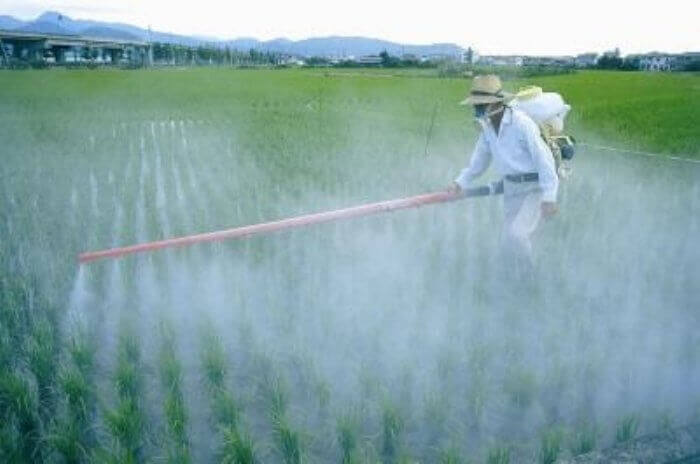
Our current methods of growing, transporting, and packaging food is contributing to massive amounts of death throughout the global land and sea. As we nourish ourselves, we must not poison the rest of the life around us. For example, take the Great Pacific Garbage patch (and the other 6 in the other oceans as well). This is a cluster of mostly plastic garbage packaging and single-use products that sits and swirls together due to the ocean’s large currents converging. It is larger than the state of Texas. There are many marine animals that are affected negatively by this Garbage Patch. For example, many sea birds such as the albatross feed on the plastic particles of trash not knowing that it is human garbage and thinking that it is what it is supposed to be eating (things such as little sea animals and plants). It also feeds plastic scraps and bottle caps to its young for the same reason. Many baby albatrosses will not be able to live into adulthood because they have been eating plastic their whole lives instead of getting the nourishment it needs due to the parent only being able to find trash instead of life to feed them. There have been many efforts by humans to try to clean up the Great Pacific Garbage Patch as more and more public concern grows, but alas it still remains. Hopefully we will eliminate this evil circumstance soon. However, we cannot just eliminate it. We must reduce the amount of trash we as a species produce and discontinue our use of plastic altogether; it is a substance that must have no place in the future if we are going to be able to bring this planet back to a healthy and sustainable reality. There are many ways to achieve this in both large and small ways. Large ways include demanding that our governments implement things like plastic bans, demanding businesses stop using plastic, demanding that oil extracting ceases (as it is the crude substance with which plastic is made), etc. In small ways one could reduce the amount of plastic they personally buy and use by shopping differently (buying more whole foods instead of packages, not eating marine life because they are largely captured using plastic nets that fishermen discard in the oceans, etc). We must take action now. This is a crisis.
In addition to the problem of the poison of plastic, we are poisoning the oceans and lands with chemical pesticides and herbicides and fertilizers as well. Only about 1 percent of human beings are farmers nowadays, down from 18 percent in 1910. Over the past century, our farms have become fewer, larger, and more deadly with increased use of mechanization and chemical-intensive practices. No longer is it the case in which most people eat produce that is locally grown by themselves or many members of their communities. No more picturesque family farms growing all sorts of vegetables and fruits. Instead, the overwhelming majority of food is grown in a monoculture setting (in which one single crop is grown over expansive fields stretching acres and acres) and managed by a handful of farmers that are struggling to keep food on the table for their families because they are in so much debt to the seed companies, the chemical companies, and the machinery companies that are forced to either buy from or exit the business. The reality of the farmer around the world, in rich and poor countries alike, is quite heartbreaking to me because it used to be an occupation with so much personal heart and community put into it and now it is an occupation of fear, hardship unimaginable to a farmer 100 years ago, and oftentimes hopelessness and so many feel trapped in an inescapable cycle of oppressive human interactions. By using the chemicals, we are not only sucking the life out of the farming occupation but also quite literally sucking the life out of our world’s soil which we greatly depend upon. Instead of planting plants or just allowing plants to grow in places naturally that replenish the soil with the correct amount of nitrogens and phosphorus and other nutrients needs to be fertile, we just douse the land with human-made versions of these nutrients. In doing so, we do not allow the soil to do this on its own and therefore it loses its natural ability to sustain life and becomes dependent upon us continuing to douse it with the chemicals. Not only is this destroying land, it is destroying the surrounding oceans as well because of course everything is connected. We spray far too much chemicals, and therefore many run off into local waterways and empty out into the oceans when it rains. This causes an uneven and unstable collecting of nutrients in the ocean which causes environmentally damaging occurrences such as oppressive algae blooms that prevent sunlight from reaching the oceans floors and sustaining marine plant life which in turn sustains marine animal life because they float the top of the water. Therefore this is another way in which we kill marine ecosystems with are poisonous practices.
While there is some protection of natural areas on land to prevent us from performing harmful activities to beautiful and important areas, there are significantly even less protections for these places that are underwater. One person who has been working tirelessly to protect the ocean and inspire others to join the movement as well is Dr. Sylvia Earle. She is a true living legend and one of the most important oceanographers in all of history. For example, using her organization and film Mission Blue she educates so many people about why and how we are dependent upon our oceans for life ourselves and explores the intricate connections between wildlife in the ocean and land. She is working to get more and more of the ocean protected with her network of Hope Spots (a campaign that I have been donating monthly to for over a year and which I highly encourage you to donate to as well!). Hope Spots can be any place in the ocean that is particularly special in some way for a local community’s culture and history, for being a wildlife hotspot, for being the home of an endangered species, etc. I love her and the mission of her organization and I truly hope that more of these protections will have a lasting positive impact on the ocean’s health. We must simultaneously protect special places in the ocean, but also realize that everywhere in the ocean and on land in special in a myriad of ways, ways that we might not even fully comprehend yet, and therefore we need change our ways and live harmoniously with the life we share this blue and green planet with. How often do you think about your connection to the ocean? Word count: 1147.
Return.

What we learn from both Food Inc. and Symphony of Soil is that going forward into a sustainable future in terms of food means going backwards in time: going back to basics, returning to nature. In Symphony of Soil, soil scientists, microbiologists, ecologists, and organic farmers shed light upon the great importance of healthy soil for all life on Earth with emphasis on its importance to humanity’s ability to produce food sustainably. There is not one cure for all types of soil and chemical means and machinery do more harm than good a lot of the time. Every farmer in every region of the world needs to adapt their farming practices so that they mimic the natural way in which the foods they are trying to grow grow in nature without human intervention. There are certain types of soils native to all regions and they are formed that way due to the plant-life that is native to that area and, firstly, due to the minerals, nutrients, and microorganisms that were present there before the plants even were there. In order for the correct amount of nutrients in the soil to be present, there must first exist these conditions and in order for the soil to continue being productive these conditions must be maintained by the cultivator. Doing things like planting a cover crop such as lentils, a hearty legume, adds and maintains the vital nutrient nitrogen into the soil because of the relationship that this plant has with certain nitrogen-fixing microbes in the soil. Therefore, immensely harmful chemical fertilizers (that are also very expensive) to supply nitrogen are not needed. It is better to not use these chemicals because they cause a lot of harm not only to the environment in which they are being directly added but also the environments elsewhere. For example, if a farmer in the heartland of the United States sprays such chemicals on their monoculture farm, it damages the local environment by depleting the soil’s ability to replenish its nutrients itself and therefore potentially causing devastating erosion. It damages environments that are further away because tonnes of these chemicals run off into local streams and rivers and wash away with the rain and wind. Eventually, these chemicals filled with nitrogen run-off into the ocean (for example, the Gulf of Mexico). In the ocean, this excess amount of nitrogen leads to excessive algal blooms that do damage for example by blocking sunlight from reaching down to the deeper parts of the water because they float at the top of the waves and also they deplete the oxygen in the ocean which causes many other organisms to die off. Therefore, a situation called a dead zone is created. It is extremely sad.
Similarly, with the other film we watched, Food Inc., we see how the mechanization of animal farming leads to environmental degradation as well. Today, in CAFOs, humans farm and kill over 70 billion animals per year. These animals require so much water, food, and medicine to survive. Also, they release greenhouse gases into the air that would be fine if there were a few of them here and there but when there is such an excessive amount of them on the planet at all times, the damage is very concerning. For example, cow’s release methane when they pass gas. Methane is a very potent greenhouse gas. Also, the amount of energy out into things like the refrigeration of tonnes and tonnes of meat every day and the fossil fuels burned during the long-distance transportation process of these meats as well also greatly contribute to climate change. Also, these animals are kept in terribly stressful conditions that are immensely overcrowded, filthy, and scary. For example, cows and pigs often have to constantly stand on grated floors where their feces falls through and also sticks to their feet constantly. If one cow or pig gets a disease, it is very likely that the other cows that it is surrounded by in such conditions will also get sick. Therefore, these animals eat a cocktail of antibiotics along their meals every single day. It is extremely sad to witness their suffering on such a heartbreakingly large scale.
I will note that these two situations, that of current plant agriculture and animal agriculture are both relatively new. Humans have only been doing these terrible things within the past fifty years, and therefore we are not doomed to do it forever because we did it for thousands of years without these practices beforehand. Also, humans face direct negative health effects from having these practices as well. For example, we eat vegetables and fruits with the residues of toxic pesticides and fertilizers on them that our bodies do not know how to digest properly (because we are not meant to eat them in the first place!). Also, when people eat these cows and pigs and chickens filled with tons of antibiotics cocktails, these people ingest these antibiotics secondarily as well. Therefore, it is dangerous to people’s immune systems.
We must return to how things were before. I will elaborate what I mean by this by discussing how I envision a future in which these problems are a thing of the past in the following sentences. A much larger amount of the population are employed as farmers, perhaps around 40 percent (which is a large difference from the current percentage which is about 2 percent). It is a career that is respected and celebrated and sought after for its peace and importance. For those not directly employed as a farmer, this does not mean that they do not grow food! Every person has access to and actively works on during their non-work hours in a home garden (useless green grass lawns are a thing of the past) or a community garden. Food is as local as it gets. There are more vegetarians and vegans as we increasingly learn about and accept the supporting scientific research demonstrating the health benefits of it. For those who still eat meat though, they eat much less of it (as people did before modern times), perhaps around once per week. With this decreased demand, people only need a few family animal farms everywhere and the need for sprawling acres with thousands of suffering animals is gone. The dead zones begin to heal and the amount of fertile soil is once again increasing in ecosystems around the world. We no longer view ourselves as separate from nature after bearing witness to these great visible improvements to the planet. Everything and everyone is much healthier and feels a greater sense of community with everything and everyone else.How do you think we can bring about this future as quickly as possible? Word count: 1121
Close the Loop!
/cdn.vox-cdn.com/uploads/chorus_image/image/63750939/3_bronner.0.png)
What does it mean to ‘be safe’ in the modern age? We are exposed to hazards that could potentially have detrimental effects on our health far more often than many of us realize or choose to think about (oftentimes even on a daily basis). There are five major categories of hazards that threaten human health: biological ones such as bacteria and viruses, chemical ones from those used in many human-made products and pesticide residue on many of our foods, natural ones such as earthquakes and hurricanes, cultural ones such as various unsafe working conditions, and those caused by lifestyle choices such as having unsafe sex and smoking cigarettes. While no one can live a risk-free life, we can still take some personal actions to mitigate the risks we face (e.g. people with access to soap and water can choose to wash their hands regularly to mitigate the risk of bacterial infection). Not all people face the same amount of daily risk. For example, people who live in a neighborhood right next to a factory that makes products using harmful chemicals (chemicals that are likely left unknown to the surrounding public), face a greater risk from these chemicals than people living in the town 50 miles away. In all likelihood, the town closest to the factory is a lower income neighborhood than the one farther away because the people who live farther away can afford to not take the risk of living so near the factory (i.e. live in a relatively safer area). These people have evaluated this particular risk and decided it was worth it financially to avoid it.
While some can evaluate risks about chemicals in this way in order to protect themselves, there are people whose job it is to evaluate such risks even before the general public gets the chance to assess for themselves. These people for example are the scientists that work on behalf of the organization or company producing the products that are being made with potentially harmful chemicals and/or those that work on behalf of regulating entities such as the government. These are the experts that determine how much of a substance can be used before it is deemed unsafe for human health. Oftentimes they are toxicologists, scientists that specifically are trained in measuring the toxicity of substances. They measure toxicity in many ways such as by testing on animals (which we are now seeing happen less and less frequently as more consumers within the past few years have been demanding ‘cruelty free’ products such as those sold in the cosmetics industry), and by doing human testing as well with people that willingly participate for monetary payment. Also, sometimes they have to test how the chemical will interact with other aspects of the environment as well due to governmental regulations in place that require companies to perform an environmental assessment. Sometimes, with new research and measurement technology being developed, we might find that a chemical we once thought was not harmful actually turns out to be very damaging as it accumulates in nature after using it in manufacturing for many years. This situation can be seen with the widespread use of the chemical DDT during the 1950s in the United States by the budding chemical farming industry. It’s damage was only greatly recognized and protested against in the following decade when influential people such as biologists and conservationist Rachel Carson wrote her now-classic book Silent Spring that exposed the harm of the chemical in wildlife. I believe we must do extensive research on the effects that a product will have on soil, water, and air before we approve it to be sent out into the market (as much testing as we require for when we test it for human health).
Chemical pollution is not the only kind that damages the environment from human manufacturing; there is the great problem of solid waste as well. Think about all of the things we throw out when we use or consume a product. The packaging that we see, the packaging that the shippers see, the scraps of parts of the food we do not eat, the parts of the products that we throw out when they break or when we simply get bored of them, etc. There is no such thing as actually ‘throwing something away’ rather we are just removing it from our immediate dwelling or workspace. Everything on Earth stays on Earth! The waste, if not managed really at all (as is the situation oftentimes in developing nations that have huge cities with either a non-existent sanitation department or one that is not nearly to the scale that it must be in order to handle the volume of trash the city produces), is likely to be seen in the streets, in peoples yards, and in the water ways. This garbage would then likely be washed away with the rain and end up in the ocean eventually. This is why we see huge pockets on the surface of the ocean called ‘great garbage patches’ such as the Great Pacific Garbage Patch that is bigger than the state of Texas. This is because the currents of the ocean push the waste to certain areas constantly and they end up in a place where two or more currents meet to sort of ‘dump’ the moving trash into an area where they eventually are done being moved by the currents and just float in one general area. Even if waste is managed, this is not an ideal situation either. Instead of floating in the ocean in a big pile, the trash will likely sit on land in a big pile! These are called landfills. They are very harmful because as the trash breaks down, leachates seep in the soil, fumes get exposed into the surrounding air, and the degrading chemicals seep all the way down in the groundwater as well sometimes (which can pollute important drinking water for humans).
I believe that in order to truly solve these problems we need to attack them at the root and not at the end in terms of waste management. We need to stop making products with harmful chemicals! We need to stop making products in which not every aspect of the product or packaging is biodegradable in a relatively short period of time or recyclable in a low-impact and low-energy way! We need to think radically differently about how to manufacture and copy nature to create a closed-loop system. How can society shift to a low-waste economy as soon as possible? Word count: 1102
Water is Life, is Life, is Life.

Water can be easily taken for granted by many of the millions of relatively wealthy (i.e. relative to the way the majority of people in the world live) people in the United States, but with increasing effects of climate change taking hold decades earlier than predicted and extreme environmental degradation of natural areas, more and more people are becoming more conscious about the importance and fragility of this planet’s water systems. One of the huge ways in which we are crippling our planet’s ability to replenish its water cycle at the amount that we and other living beings have been accustomed to for hundreds of thousands of years is by removing the amount of diverse vegetation growing on land. For example, the Amazon rainforest is one of the great ecosystems that contribute a lot to the regular rainfall patterns of the Americas. This occurs because of many factors in the cycle. When it rains over the forest, the soil is able to soak up much of the rain due to the vast amount of and vast diversity (in terms of length and spread) of root systems below the surface. Because of this abundance of water, more and more plant life can continue to flourish. With such a vast amount of vegetation, and the intense heat due to the forest’s proximity to the equator, a lot of transpiration occurs as the waste evaporates from the leaves of the plants. Therefore, clouds of water vapor form in the air space directly above the forest (which is why many rainforests are also called ‘cloud forests’). These clouds eventually drift with the wind and develop to become the thundering rain clouds in the Northeast U.S. This is just one of the ways in which we are connected to water cycles of the Amazon. So, in light of this illustrative example, I will now paint a picture of what happens when we remove such vegetation. In an area of the world that has been replaced with acres and acres of corn, rainwater does not soak into the soil as well because there are fewer roots in the soil and the roots that are there are all about the same length and therefore catch water in the soil at the same depth. This means that a lot of water, instead of soaking into the ground, will likely glide along the surface until it reaches a waterway and joins it instead of being part of the plant-replenishing-cloud creating process. Similarly, this happens in places (many places especially in wealthy nations) in which much of the soil is blocked by concrete or a paved road with no permeability. As a result, we are seeing cases arise such as bodies of freshwater not being as big as they used to be and more places experiencing drought for longer periods of time.
In addition to our environmental-damaging practices contributing to the depletion of the world’s water sources, we are also unfortunately contributing to the pollution of the water sources we have left. For example, we are dealing with the global and extremely scary problem of plastic pollution in our ocean. There are several pools of trash in the ocean called ‘the great garbage patches’ and some of them are even bigger than the state of Texas (such as the one in the Pacific). The majority composition of these floating garbage piles is plastic waste. This is extremely harmful to the wildlife that eat it because they do not have the ability to digest such a substance (and neither do we). Therefore, animals will often die because they have accumulated plastic in their bodies over their lifetime and this accumulation has for example prevented them from being able to adequately fill their stomachs with the food that they should be eating in order to survive. Other times, an animal will die because it got trapped by plastic in some way that restricts its ability to move or grow properly. For example, a growing turtle gettings its neck caught in a soda-pack ring or a puffer fish puffing up while inside a plastic bag, piercing it at many points, and thus being unable to remove it from its body. In addition to this plastic pollution that we can clearly observe, there is the problem of microplastics (because plastic of course does not get broken down naturally, only continuously turned into smaller and smaller particles). These are especially dangerous because they are an attack on the near bases of thousands of food chains (i.e. very small animals). So, when larger animals eat these small animals in large quantities (which they need to do to survive), they are also consuming large quantities of the microplastics in stomachs of the small animals. We must take actions to end our use of plastics and clean up the overwhelming amount we already have created.When I put my information into the water usage calculator, I discovered that I approximately consume 718.8 m³ of water per year. I have taken concrete steps to reduce my water usage over the past few years. These actions include: taking shorter showers than used to in the past, becoming a vegetarian, and not shopping for new clothes. Also, when buying products such as plant-based milks, I used to choose almond milk but for the past year I have switched to oat milk upon learning that on average it uses 90 percent less water to produce the same amount of it as almond milk does. Also, I have a water bottle that I drink from every day so that I never choose to buy a plastic water bottle. In the documentary film Tapped, people expose the ways in which the water bottle companies not only contribute to plastic pollution by creating disposable plastics and lobbying against effective recycling legislation, they also deplete the water sources where they get their water from. We must stop supporting these companies and fight to ensure that clean water is accessible to everyone for free! Also, we must transition into farming practices that conserve water and replenish soil rather than deplete it. This means that we must transition to regenerative, diversified, organic, small-scale food systems. It makes me extremely sad and scared to think about how we abuse our water systems under current ways of life. Water is so precious and we can definitely turn this situation around with action, action, action! Already there are efforts being made in many cities to increase recycling rates, there is an organic and local food movement growing, there are large-scale ocean clean-ups happening, and there are even new technologies being developed that can remove microplastics from the ocean. These developments make me hopeful. How do you reduce your own water consumption? What can we do as residents of one of the richest countries in the world? Word Count: 1139
Our Change.

Humans have been able to advance our technological abilities and grow our population to such a great extent that we are now in what is called the anthropocene by many. This means that we are in an era where our very own species is in control of the fate of the planet. We are changing it whether some choose to accept this reality or not. We remove billions of animals from the ocean, put billions of tonnes of greenhouse gases into the air, destroy ancient forests and melt ancient ice every single year without fail. Since, as far as I can personally imagine, it seems as though we as a species will never choose to relinquish our power over the planet we must instead change the way we run it. We can no longer continue to extract and use fossil fuels. This is a non-negotiable aspect. We must figure out a way to run everything and do all of our activities on renewable energy. We also have to make our food and the production of everything else much more closer to home. However, before continuing to discuss the possible solutions of anthropogenic climate change and all of the other massive problems that we have caused directly, I will describe such problems and discuss how we have caused them.
Firstly, I will discuss how we have caused what some are calling the sixth mass extinction. One reason why this is happening is because we have destroyed so many natural habitats for non-human creatures and plants at such a massive scale that what remains can no longer support the same level of life that it once did before we destroyed it. For example, many different types of elephants used to have free range of huge swaths of land all across the continent of Africa (a level of range that seems unimaginable today). Now, elephant populations are extremely low when you compare them between how they are today with how they were even just 200 years ago (which is not a long time whatsoever when discussing life on Earth and its changes) and this is largely because their populations are limited to areas of land that are a tiny fraction of what they used to be (for example, on elephant sanctuary reservations). Similarly, the Amazon rainforest which holds an abundance of life is being depleted at an alarming rate largely due to companies destroying it by burning it to make space to grow livestock, palm oil, corn, and wheat. One of the greatest things you as an individual can do to not contribute to this violence is to limit the amount of meat and dairy you consume (or even cut it out of your diet completely). I have done this and I can attest that it has only led to positive things in my life. My health is better, I have more energy, I feel good about being more removed from the violence and destruction, and it has been way easier than I had originally anticipated. Now, I will discuss how we are contributing to climate change.
We are contributing to climate change for many reasons but I will now be discussing how we directly contribute to it by emitting large amounts of greenhouse gases. We burn coal and oil and natural gas to heat buildings, cooking utilities, transportation technologies, entertainment, production, communication, etc. We have built a whole life around it as it destroys so much life every day. The carbon dioxide and methane and other gases get trapped in the atmosphere and cause the planet to contain more heat from the sun that it was before we started burning all of these fossil fuels. This extra heating sets off a global chain of reactions that we summarize as climate change. Climate change is currently causing oceans to acidify, hurricanes to intensify, global temperatures to rise, ice to melt, corals to have bleaching events, once fertile lands to have longer and longer periods of drought, etc. We have caused this and continued to do nothing about it because the people who are profiting from destroying the planet in this way are making trillions of dollars and will refuse to give that up without a fight. I am talking about the people who own the oil companies, the people who own the technologies that run on oil, the people who these owners have been paying for decades to not take political actions against them. We can turn everything around as soon as we actively topple these power holders off of their violent thrones. It is only by exploiting everything and everyone that they were able to become so powerful in the first place. It is sickening and sad.
The anthropocene does not have to be the terrifying reality that it currently is and it does not have to foreshadow the devastating future that it will be if things continue as usual. We have the power to rise up and change things for the better! It is going to require outside of the box thinking because we are dealing with a problem that no one in the history of human civilization has ever dealt with before. Also, I think there are many actions and strategies that can be used all at the same time. Again, because we do not know exactly what will work, we have to try everything! Some people can do some things, while others cannot and therefore everyone can have a role to play using their own personal situation in life, skills, location, personal connections, history, knowledge, imagination, etc. Some parts of it might be peaceful, some violent; some easy, some more difficult; some politically, some grassroots We have to remember that we are all connected to each other and that we are also, as a species, connected to all other species in some way or another. We have been living in human systems that purposefully make us forget or disregard these beautiful connections but we must work hard to remember. I have hope that we will turn this around before it is too late because I choose to believe in my fellow human and use every day I have to try to help others believe in our goodness and power as well. How do you think you can personally contribute to the movement to shift global society towards a standard that is in harmony with the rest of life on the planet? How much are you willing to do to make this happen? How much are you willing to give up? Do you think that not taking action is worth whatever you will have gained by remaining complacent? Word count: 1110
 A Thoughtful Animal